
Portable Gaming PCs After Steam Deck: Can They Replace Traditional Consoles?
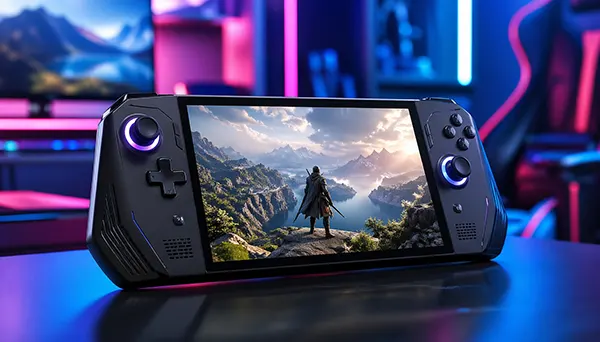
The release of Valve’s Steam Deck marked a turning point for portable gaming, shifting attention from lightweight handheld consoles to fully-fledged gaming PCs in a compact form. By 2026, devices such as ASUS ROG Ally and Lenovo Legion Go have expanded this category, offering desktop-level flexibility in a portable format. This article examines how handheld gaming PCs have evolved, how they compare with traditional consoles, and whether they can realistically take over the role of home gaming systems.
The Rise of Handheld Gaming PCs
The handheld gaming segment has existed for decades, but earlier devices were limited by weak hardware and closed ecosystems. The Steam Deck changed expectations by delivering a Linux-based system capable of running a vast PC library through Steam, including demanding titles. Its success proved there was real demand for portable systems that behave like PCs rather than simplified consoles.
Following Valve’s approach, manufacturers such as ASUS and Lenovo entered the market with more powerful alternatives. The ROG Ally introduced Windows-based flexibility, allowing users to install launchers like Steam, Epic Games Store, and Xbox Game Pass. Lenovo’s Legion Go pushed the concept further with detachable controllers and a larger display, blurring the line between handheld and hybrid systems.
By 2026, this category continues to grow, driven by improvements in AMD Ryzen Z-series processors and integrated RDNA graphics. These chips offer a balance between performance and efficiency that was previously impossible in small devices. As a result, handheld PCs are no longer niche gadgets but serious gaming machines capable of running modern titles.
How Modern Devices Differ from Earlier Handhelds
Unlike traditional handheld consoles, modern portable PCs operate as open systems. Users can install software, adjust performance profiles, and even use them as productivity devices. This flexibility appeals to players who want a single device for gaming and everyday tasks.
Another key difference is performance scaling. Handheld PCs allow users to balance power consumption and frame rates depending on the situation. For example, a player might lower settings to extend battery life during travel or maximise performance when connected to a power source.
Finally, the ecosystem itself has changed. Cloud gaming, cross-platform saves, and subscription services like Xbox Game Pass make it easier to access large libraries without being tied to one manufacturer. This shifts the focus from hardware exclusivity to convenience and accessibility.
Advantages and Limitations Compared to Consoles
Portable gaming PCs offer several advantages over traditional consoles. The most obvious is flexibility: users are not restricted to a single digital store or ecosystem. They can access multiple platforms, modify games, and even emulate older systems. This level of control is rarely available on consoles like PlayStation or Xbox.
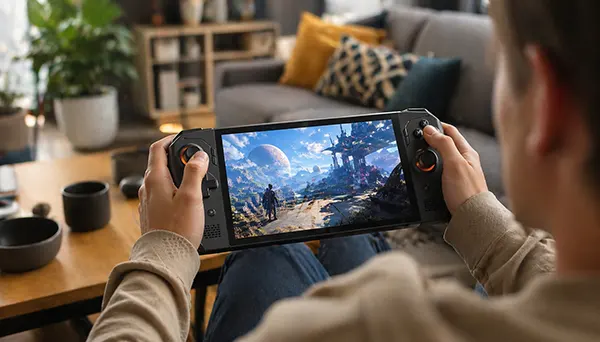
Another benefit is portability without sacrificing capability. While consoles deliver consistent performance at home, handheld PCs allow players to continue the same games on the move. Docking options also enable connection to external monitors, effectively turning these devices into compact desktop systems.
However, this flexibility comes with trade-offs. Handheld PCs often require more configuration, which may not appeal to users who prefer a straightforward experience. Operating system updates, driver compatibility, and performance tuning can create friction compared to the plug-and-play nature of consoles.
Performance, Battery Life, and Practical Use
Performance is one of the strongest selling points of modern handheld PCs, but it varies depending on power settings. When plugged in, devices like the ROG Ally can deliver frame rates comparable to entry-level gaming PCs. On battery power, performance is typically reduced to preserve energy.
Battery life remains one of the main limitations. High-performance gaming can drain a device within two to three hours, especially when running demanding titles. This contrasts with consoles, which are designed for continuous use without power constraints.
In real-world scenarios, handheld PCs are most effective in specific contexts: commuting, travel, or casual gaming sessions. For long gaming sessions at home, traditional consoles still provide a more stable and consistent experience, particularly when connected to large displays.
The Future of Portable Gaming
The direction of portable gaming suggests continued growth rather than replacement. Manufacturers are investing in more efficient processors, better cooling solutions, and improved battery technologies. Advances in AI-based upscaling, such as AMD FSR and similar technologies, allow devices to maintain visual quality while reducing hardware strain.
Software optimisation is also improving. Game developers are increasingly considering handheld performance profiles during development, ensuring smoother experiences on portable systems. Operating systems are evolving to offer console-like interfaces, reducing complexity for users who prefer simplicity.
At the same time, cloud gaming is likely to play a larger role. With faster internet connections and lower latency, players can stream high-end games to handheld devices without relying entirely on local hardware. This could extend battery life and reduce the need for constant hardware upgrades.
Will Handheld PCs Replace Traditional Consoles?
It is unlikely that handheld gaming PCs will fully replace traditional consoles in the near future. Consoles still offer advantages in price stability, optimisation, and ease of use. They are designed for a consistent experience, which remains important for many players.
However, handheld PCs are redefining expectations. They are not direct competitors but complementary devices that expand how and where people play. For users who value flexibility and access to multiple ecosystems, portable PCs may become the primary gaming solution.
Looking ahead to the next few years, the market will likely continue to diversify. Rather than one category replacing another, players will choose devices based on their habits—whether that means gaming on a large screen at home or continuing the same experience on the move. The emergence of handheld PCs is less about replacement and more about giving players new ways to engage with games.
Similar articles
-
 Wireless Graphics Card over Wi-F...
External graphics have traditionally meant accepting a cable. …
-
 Letter Pirate: How Competitive M...
Letter Pirate takes a familiar word-game idea and …